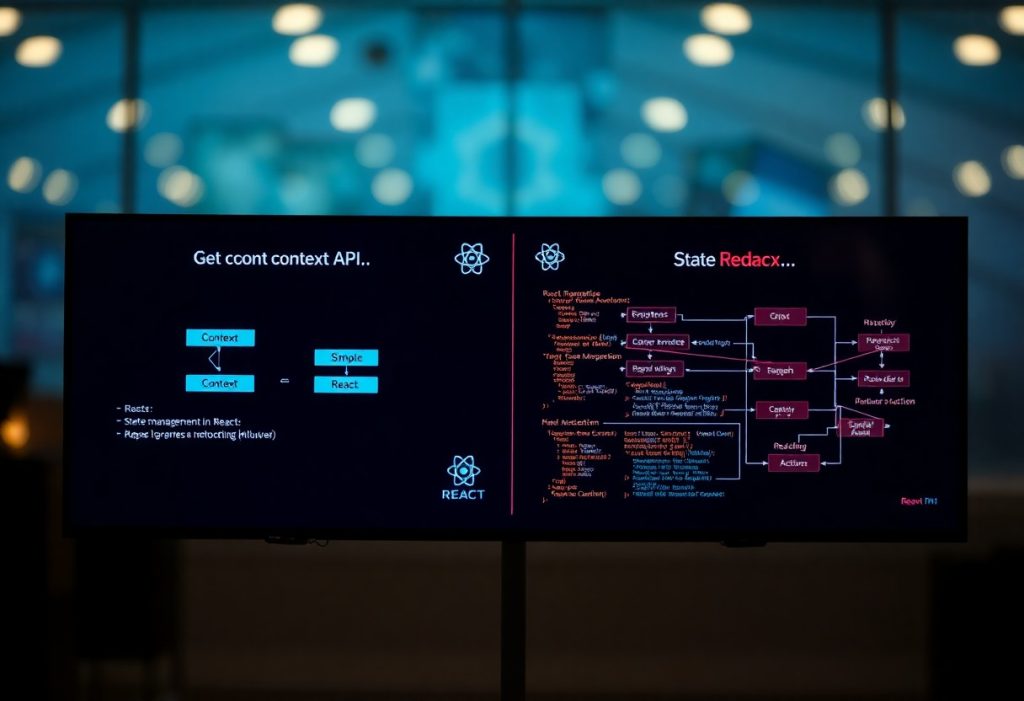

Most modern web applications require efficient state management to enhance user experience and application performance. As you navigate the evolving landscape of state management libraries in 2024, it becomes vital to weigh the strengths and weaknesses of Redux, Zustand, and Context API. Each offers unique approaches to handling state, impacting how you structure your applications and manage complexity. This post aims to guide you in making an informed decision for your development needs.
Key Takeaways:
- Redux remains a robust choice for complex state management due to its predictable state container and extensive ecosystem.
- Zustand offers a simpler, more lightweight solution, focusing on ease of use and performance without boilerplate code.
- Context API is suitable for smaller applications or component-specific state, providing a straightforward approach without additional libraries.
The Evolution of State Management
State management has undergone remarkable transformations, adapting alongside developments in web technologies and user expectations. As applications have become more complex, optimal solutions for managing state efficiently have emerged and evolved, making your choices more diverse and sophisticated. This dynamic landscape continuously shapes the way you manage application states, with contemporary solutions like Redux, Zustand, and the Context API vying for your attention.
Historical Context
Your understanding of state management reflects a rich history, starting with simple local state management approaches in the early days of JavaScript, evolving into more structured solutions like Redux in 2015. These frameworks addressed the need for predictable state changes in response to user interactions, paving the way for broader adoption of reactive programming paradigms.
Key Developments in 2024
This year marks pivotal advancements in state management, as developers embrace new frameworks that promise simplicity and performance. Zustand has gained traction for its lightweight and intuitive API, while Redux continues to innovate with improved middleware capabilities, allowing for more seamless integration with TypeScript and modern React features.
In 2024, you’ll find Zustand’s adoption rising significantly due to its state management solution that favours minimal setup and performance efficiency without boilerplate code. Redux has also launched a new toolkit that enhances developer experience by simplifying the implementation of slices and middleware. Furthermore, Context API has evolved with improved performance benchmarks in concurrent rendering, making it a viable option for smaller applications. These developments indicate a shift towards user-centric, adaptable state management practices, streamlining workflows and fostering productivity.
Redux: The Established Titan
Redux remains a titan in state management despite newer contenders. Its popularity stems from a predictable state container which enables seamless data flow within applications. For an insightful comparison, explore React State Management | Context API vs Redux vs Recoil ….
Core Principles
At the heart of Redux lies a unidirectional data flow and a single source of truth, the store. Actions describe changes, while reducers dictate how these changes affect the state. You’ll find that this structured approach greatly simplifies debugging and enhances maintainability.
Advantages and Limitations
Redux offers significant advantages, such as powerful middleware capabilities and excellent developer tools. However, its boilerplate code and steep learning curve can deter new users. In smaller applications, its complexity can feel unwarranted, making alternatives like Zustand appealing.
In practical scenarios, Redux’s flexibility shines through large-scale applications where state management is inevitably intricate. While the apparent complexity may seem overwhelming initially, the robustness it provides through realistic projects justifies the investment of time and effort. Despite this, you must weigh these advantages against the limitations regarding build size and onboarding thresholds, particularly for teams new to structured state management approaches.
Zustand: The New Contender
Zustand has rapidly emerged as a noteworthy alternative in the state management landscape, offering a compelling blend of simplicity and performance. It operates on a minimalistic API, allowing developers to manage state effortlessly while maintaining high efficiency. With its lightweight nature and the absence of boilerplate code, Zustand particularly appeals to those who favour a straightforward approach, without compromising on functionality. This approach not only enhances productivity but also provides a clear pathway for integrating state management into existing applications.
Simplicity and Flexibility
What sets Zustand apart is its remarkable simplicity combined with flexibility. You can create global state without the overhead often seen in other solutions. The API is intuitive, so you engage directly with your state without convoluted syntax or structures. This ease of use empowers you to scale your application gracefully, while still allowing for intricate state management when required, striking a balance that many developers aspire to achieve.
Use Cases and Best Practices
Zustand shines in various scenarios, particularly for projects where quick state management is imperative, such as small to medium-sized applications or prototyping. As a best practice, leverage Zustand when you need simple and global state management without the complexity of deep nested states. Pairing Zustand with React components enhances the performance and responsiveness of your applications, making it an ideal choice for developers seeking efficient solutions in interactive projects.
In real-world applications, consider Zustand for managing form states or user preferences where real-time updates are necessary. Its capabilities fit well within e-commerce platforms for handling cart states or user session management. Additionally, when working with applications that require local state management in conjunction with API calls, Zustand proves efficient, ensuring a seamless user experience that is both fluid and responsive. Keeping your state logic clean and separate allows for easier debugging and maintenance, underlining the importance of best practices alongside Zustand’s inherent simplicity.
Context API: The Native Solution
The Context API presents a built-in solution for state management in React applications, enabling you to share state across components without the need for complex Redux configurations. It utilises the React tree to pass data, making it a seamless option for many projects. For a comparative analysis on State management in React: Context API vs. Zustand…, you’ll find valuable insights to guide your decisions.
Integration with React
Integrating the Context API with your React components is straightforward. You define a context using `React.createContext`, then wrap your components with a provider. This setup allows child components to consume the context, accessing state conveniently without prop drilling.
When to Use Context API
The Context API is particularly effective for managing global state that is required by multiple components at various levels of your application. It simplifies workflows for moderate state management needs where you aim to avoid the overhead that comes with libraries like Redux.
Context API shines in scenarios where the state changes are infrequent and the data structure is relatively simple. For example, when dealing with themes or user authentication status, using Context ensures that you maintain clarity without overcomplicating your codebase. It is imperative to evaluate the scale of your application, as unnecessary use of Context for large, complex states can lead to performance issues, causing re-renders across wider parts of your component tree.

Comparative Analysis
| Framework | Key Features |
|---|---|
| Redux | Predictable state management with a robust ecosystem and middleware support. |
| Zustand | Minimalistic API, no boilerplate, and easy synchronisation with React. |
| Context API | Native React solution, best for simple state management and smaller applications. |
Performance Metrics
When evaluating performance metrics, it’s imperative to consider re-renders. Redux can be efficient with memoisation but may incur a higher overhead due to its middleware. Zustand excels in this area, allowing for selective state updates. In contrast, the Context API, while simpler, might lead to unnecessary re-renders as all consumers of the context will update with any state change.
Use Case Scenarios
Your choice of state management should align with your application’s complexity. For large-scale applications requiring intricate state logic and middleware, Redux shines. In contrast, Zustand is well-suited for applications needing rapid development cycles and straightforward state management. Meanwhile, the Context API can effectively serve smaller applications or components where minimal state sharing is needed.
For complex applications, Redux is often favoured due to its strict architecture and control over state flow, making it ideal for teams that require maintainability and predictability. In simpler setups, Zustand offers developers flexibility without added complexity. The Context API, being a built-in solution, should be your go-to when the state requirements are minimal and straightforward, showing that the best tool often depends on the specific demands of your project.
Future Trends in State Management
In the ever-evolving landscape of state management, you can expect vibrant discussions surrounding frameworks such as Zustand and React Context. As developers seek lightweight solutions, the push for simplicity over complexity will be paramount, with a growing emphasis on performance optimisation and lesser boilerplate code. Trends indicate a harmonious blend of state management strategies, embracing hybrid approaches to enhance scalability and maintainability.
Predictions for Upcoming Year
The upcoming year will likely see a rise in community-driven libraries, fostering collaboration around hybrid models that marry the strengths of established methods while addressing their limitations. Expect new tooling aims to streamline integration with both small and large applications, empowering you to tailor solutions precisely to your needs.
Potential Innovations
Innovations on the horizon include enhanced developer experiences, with state management libraries adopting higher-level abstractions and improved debugging tools. This could render debugging less cumbersome and more intuitive, aiding you in tracking state changes effectively across complex applications.
Moreover, AI-driven tools could transform your approach to state management, assisting in predicting state behaviour based on historical data, ultimately refining how you architect applications. The integration of reactive programming patterns alongside popular frameworks may streamline the flow of data, allowing for quicker iterations and an easier maintenance cycle. As you adopt these innovations, expect to witness a marked improvement in team productivity and application performance.
Conclusion
Taking this into account, you should evaluate Redux, Zustand, and Context API based on your specific application needs in 2024. Each offers distinct advantages and resonates differently with your development style. As you navigate these options, consider factors like complexity, performance, and ease of integration. By aligning your choice with the nature of your project, you can optimise state management to enhance the overall functionality and user experience of your applications.