

Angular encompasses various forms of testing that enhance the quality of your applications. You will frequently engage with unit tests to verify individual functions, while component tests will ensure your components behave as intended. End-to-end (E2E) tests provide a broader perspective, validating the entire application’s workflow. By mastering these testing methodologies, you can significantly improve your development process and produce more reliable software.
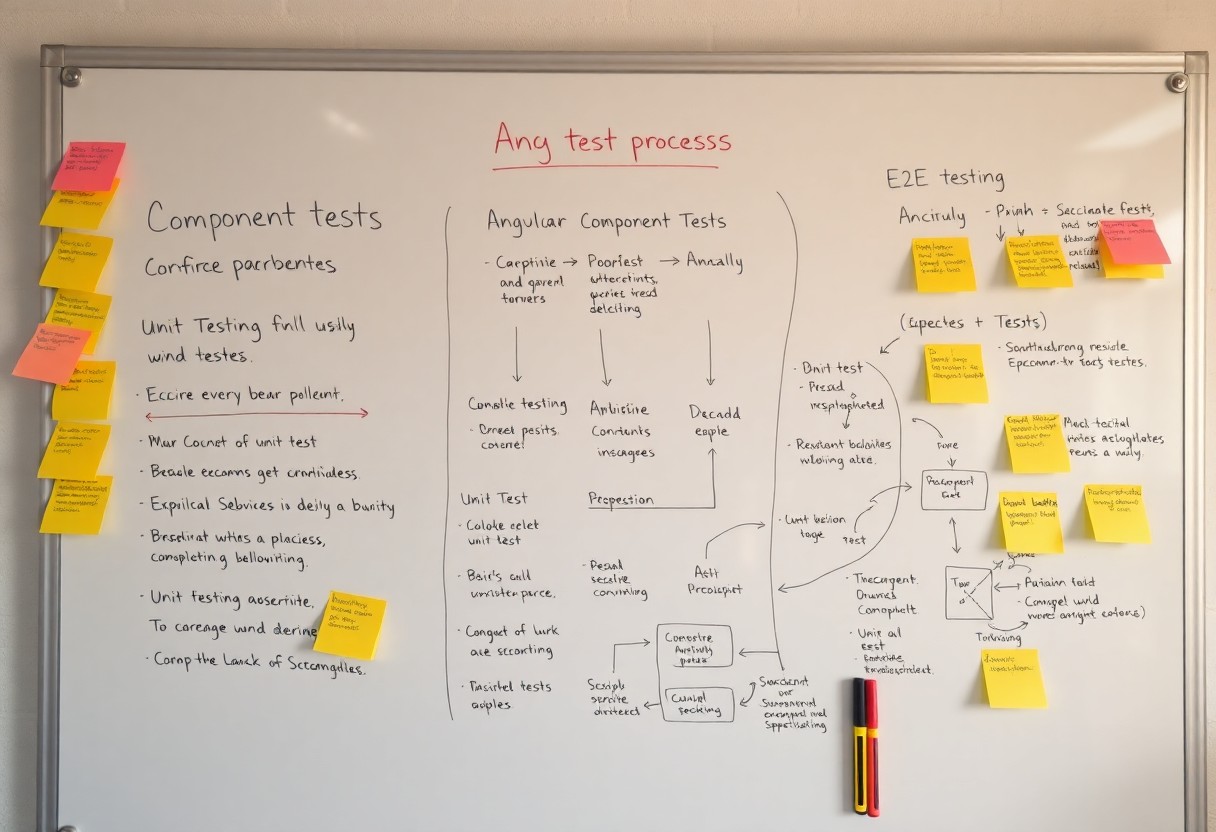
Key Takeaways:
- Unit tests are designed to validate individual functions or methods within components to ensure they behave as expected.
- Component tests focus on the interactions and rendering of specific components within the Angular application, testing their behaviour in isolation.
- E2E (End-to-End) tests simulate user interactions with the application as a whole, verifying that the entire system functions correctly from start to finish.
Understanding Angular Testing
In Angular, testing serves as a backbone ensuring your applications function as intended. Mastering this aspect not only strengthens your code quality but also fosters a culture of accountability and reliability within your development practices. Embracing a systematic approach to testing will empower you to catch errors earlier, leading to smoother deployments and a more robust user experience.
The Importance of Testing in Angular
Testing in Angular is vital for maintaining a high standard in code quality and performance. By implementing thorough testing practices, you can identify and rectify issues early in the development cycle, saving time and resources in the long run. This proactive approach not only safeguards your application from potential failures but significantly enhances the end-user experience.
Types of Angular Tests
Angular provides a spectrum of testing types tailored to different components of your application. These include unit tests, which validate individual functions or methods; component tests, focusing on the behaviour of UI components; and end-to-end (E2E) tests that simulate user interactions across the application. Each testing type plays a distinct role in ensuring overall application integrity.
| Type of Test | Description |
|---|---|
| Unit Tests | Test individual functions for expected behaviour. |
| Component Tests | Focus on the functionality of Angular components. |
| E2E Tests | Simulate user scenarios across the application. |
| Integration Tests | Ensure multiple components work together effectively. |
| Performance Tests | Evaluate the application’s responsiveness and speed. |
Understanding these different types of tests is necessary for building a comprehensive testing strategy. Unit tests provide a foundational layer ensuring each code unit operates correctly, while component tests facilitate the verification of user interface elements. E2E tests mimic real user behaviour, allowing you to identify issues that arise during actual use. Integration and performance tests complement these by ensuring cohesive behaviour and optimal speed, respectively.
- Recognising the value each test type brings to your project enhances overall development efficiency.
| Test Focus | Benefits |
|---|---|
| Unit Tests | Quick feedback on code quality. |
| Component Tests | Effective UI verification. |
| E2E Tests | Simulates real-world usage. |
| Integration Tests | Checks interactions between components. |
| Performance Tests | Ensures application remains responsive. |
- Recognising each method’s specific advantages will empower you in structuring an effective testing framework.
Unit Tests
Unit tests form the backbone of reliable Angular applications, allowing you to validate individual components, services, or functions in isolation. By executing these tests, you ensure that each unit behaves as expected, simplifying debugging and promoting maintainable code. You can achieve a higher confidence level in your application’s functionality, leading to a more robust end product.
Defining Unit Tests
Unit tests are automated tests that focus on verifying the smallest pieces of code, usually functions or methods, within your application. They are designed to run quickly and are often executed frequently during development. By isolating each unit, you can identify defects early, gaining insights into your code’s reliability and performance.
Best Practices for Writing Unit Tests
When crafting unit tests, keep your tests focused, maintain simplicity, and ensure they are independent. Each test should verify a single behaviour and not depend on external factors, which allows for easier debugging. Naming conventions should be clear to convey the purpose of each test effectively. It’s beneficial to use mocking frameworks to isolate dependencies, enhancing the test’s reliability.
For effective unit testing, consider using tools like Jasmine or Jest alongside Angular’s testing utilities. Aim to cover various scenarios, including edge cases, ensuring your tests reflect real-world usage. Maintaining a test suite that runs quickly allows for frequent execution, thereby facilitating continuous integration (CI). Covering at least 80% of your code with tests provides a noteworthy safety net, enhancing your capability to implement changes with confidence, as well as streamlining the review process.
Component Tests
Component tests are important for ensuring your Angular components function as expected in isolation. These tests focus on rendering components, checking interaction with template elements, and verifying the binding of data. By implementing component tests, you can boost the reliability of your application, as they help you catch issues before they affect the end user. For a comprehensive understanding of component testing, you might consider exploring Angular Testing: Unit Testing Angular and E2E Testing.
The Role of Component Tests in Angular Applications
Component tests validate your Angular components independently, ensuring that each unit functions correctly. By doing so, you provide assurance that user interactions yield the intended results, which is fundamental in developing a robust application. Every time a component is modified, these tests act as a safety net, flagging potential failures before deployment.
Tools and Frameworks for Component Testing
Various tools and frameworks are available for component testing in Angular, including Jasmine, Karma, and Protractor. Jasmine serves as the testing framework, providing syntax for writing tests, while Karma acts as a test runner to execute them. Protractor, on the other hand, is designed for end-to-end testing but includes features beneficial for component tests, especially in integration scenarios.
In addition to Jasmine and Karma, Angular’s integrated testing utilities such as TestBed and ComponentFixture are invaluable. TestBed allows you to configure a testing module, while ComponentFixture facilitates the creation and manipulation of components in a test environment. Leveraging these tools equips you to write effective component tests, fostering confidence in your application’s functionality and performance.
E2E Testing
E2E testing evaluates your application as a whole, simulating user interactions to ensure everything functions as intended. For guidance on determining the right balance between unit and E2E tests, explore this insightful resource.
Understanding End-to-End Testing
You examine into E2E testing, where the objective is to verify the entire system’s functionality as an end-user would experience it. Rather than isolating components, these tests simulate real-world scenarios, assessing workflows across multiple pages or systems. This holistic approach ensures that complex integrations and interactions are validated in a comprehensive manner.
Implementing E2E Tests in Angular
To implement E2E tests in Angular, you typically utilise Protractor, a testing framework designed for Angular applications. First, you set up the testing environment, ensuring Protractor can interface with your application seamlessly. Following this, you write tests that navigate through your application, executing user interactions while verifying that expected outcomes align with actual results.
Protractor provides a robust ecosystem for locating elements, interacting with them, and asserting expected behaviours. You can define specific test cases that cover critical user paths, from logging in to completing transactions. This structured approach enables you to maintain a high level of quality across releases, ensuring user satisfaction and operational efficiency. Automated tests can be set to run with each deployment, significantly reducing regression errors and providing immediate feedback on application integrity.
Common Challenges in Angular Testing
Testing in Angular presents various challenges, such as managing asynchronous operations, complex component dependencies, and ensuring accurate test coverage. The intricacies of Angular’s change detection and lifecycle hooks can also complicate the testing process. Understanding the Differences Between Unit Testing and End-to-End Testing is necessary to effectively navigate these obstacles.
Troubleshooting and Debugging
When you encounter issues during testing, effective troubleshooting and debugging are vital. Familiarity with tools like Angular’s testing utilities—Jasmine and Karma—can aid in diagnosing failures. Carefully read error messages and utilise console logging to gain insights into which parts of your code may be malfunctioning.
Performance Considerations
Performance issues often arise in testing, primarily when dealing with a large number of tests. You must ensure that tests run efficiently without unnecessary delays. Strategies like using test doubles, properly configuring Angular’s testing framework, and modularising your tests can enhance speed and maintainability.
Addressing performance in your tests involves several techniques. For instance, executing tests in parallel can drastically reduce overall testing time. Additionally, you can mitigate the performance impact of heavy dependencies by mocking services and avoiding real HTTP requests. Implementing these practices can lead to faster feedback loops, allowing you to focus more on development rather than waiting for test outcomes.
Future of Angular Testing
The future of Angular testing is poised for innovation, with advancements in methodologies and tools that streamline the testing process. As frameworks evolve, the need for more efficient, scalable, and maintainable testing approaches will become paramount. Embracing modern practices will enable developers to not only enhance code reliability but also reduce the time taken for testing cycles. By integrating seamlessly with development workflows and focusing on the user experience, Angular testing will remain a powerful ally in your software development journey.
Emerging Trends and Technologies
You will likely notice a shift towards automation and integration of cloud-based testing platforms. Tools like Cypress and Playwright are gaining traction, providing robust end-to-end testing capabilities while simplifying setup and execution. Also, the rise of microservices architecture necessitates more effective testing strategies that cater to complex application structures, ensuring that individual components work seamlessly together.
The Role of AI in Testing
AI is transforming the landscape of testing by providing intelligent solutions for automating repetitive tasks and identifying potential bugs more efficiently. With machine learning algorithms analysing vast amounts of code and user interactions, you can expect to receive insights that enhance test coverage and accuracy.
As AI becomes ingrained in testing processes, scenarios such as predictive analysis for bug detection and automated test generation are becoming commonplace. These technologies not only save you valuable time but also foster more reliable applications. For instance, some tools can learn from past testing experiences, adapting to new code changes and highlighting areas most likely to fail. This allows you to focus efforts on the highly probable pain points rather than the entire codebase, significantly enhancing productivity and application quality.
Final Words
With these considerations, you are equipped to navigate the complexities of Angular testing. Emphasising unit tests, component tests, and end-to-end testing enables you to fortify your applications against unforeseen errors. By utilising these methodologies, you enhance the robustness and reliability of your code, ensuring that your user experiences are not only seamless but also enriched by the foundational principles of scientific inquiry and rational thought. Thus, your journey through Angular testing can lead to a more profound understanding and mastery of your craft.